

Heat Pump Market Size to Hit $201.5 Billion by 2032 Amid Clean Energy Adoption
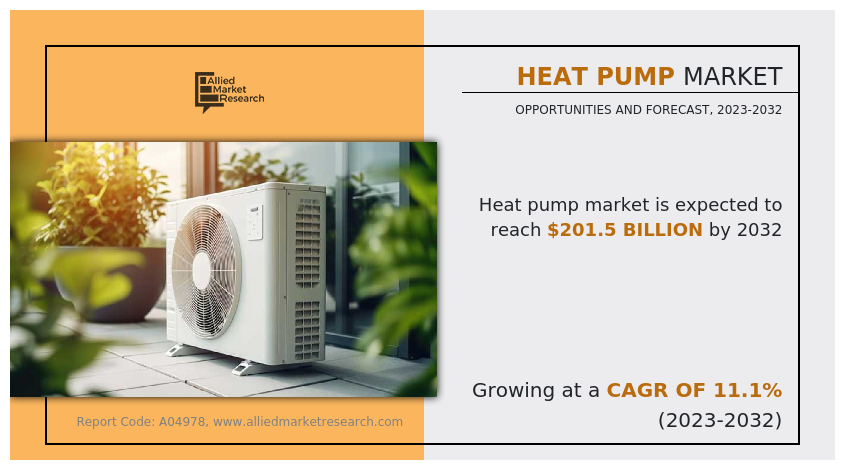
The Heat Pump Market is projected to reach $201.5 billion by 2032, driven by energy efficiency goals, HVAC demand, and clean heating adoption.
Rising investments in sustainable heating and cooling technologies are accelerating Heat Pump Market growth across residential, commercial, and industrial sectors. ”
WILMINGTON, DE, UNITED STATES, June 15, 2026 /EINPresswire.com/ -- — Allied Market Research
The Heat Pump Market is witnessing remarkable expansion as governments, businesses, and consumers increasingly prioritize energy-efficient heating and cooling technologies. Heat pumps have emerged as one of the most effective solutions for reducing energy consumption while supporting decarbonization goals across residential, commercial, and industrial sectors. According to recent industry findings, the Heat Pump Market was valued at $71.2 billion in 2022 and is projected to reach $201.5 billion by 2032, registering a CAGR of 11.1% during the forecast period.
Heat pumps operate by transferring thermal energy from one location to another through a refrigeration cycle. Unlike conventional heating systems that generate heat through combustion or electrical resistance, heat pumps move heat efficiently, resulting in significantly lower energy consumption. Their ability to provide both heating and cooling functionality has positioned them as a preferred technology in modern building infrastructure.
Download PDF Brochure: https://www.alliedmarketresearch.com/request-sample/5341
The growing emphasis on energy conservation, climate change mitigation, and electrification of heating systems is transforming the global heating and cooling industry. As nations pursue net-zero carbon targets, heat pumps are increasingly recognized as a critical technology capable of reducing greenhouse gas emissions while maintaining indoor comfort. The Heat Pump Market continues to benefit from supportive regulations, financial incentives, technological advancements, and increasing consumer awareness regarding sustainable energy solutions.
Heat Pump Market Overview
The Heat Pump Market encompasses a broad range of technologies designed to deliver efficient thermal management solutions. These systems extract heat from air, water, or ground sources and transfer it for residential, commercial, or industrial use. Modern heat pumps are capable of operating effectively even under challenging environmental conditions, making them suitable for diverse geographic regions.
The market includes air-to-air heat pumps, air-to-water systems, water source heat pumps, geothermal solutions, and hybrid heating systems. Demand continues to rise due to increasing energy prices, environmental regulations, and growing investments in green building projects.
Governments across major economies have introduced incentives, rebates, and tax benefits encouraging consumers to replace traditional fossil-fuel-based heating systems with electric heat pump technologies. These initiatives are significantly contributing to Heat Pump Market growth while creating long-term opportunities for manufacturers, installers, and component suppliers.
Furthermore, ongoing technological advancements in compressors, refrigerants, smart controls, and heat exchangers are improving system performance and expanding application possibilities across various industries.
Heat Pump Market Growth Factors
Several factors are contributing to the robust expansion of the Heat Pump Market globally. One of the primary growth drivers is the increasing demand for energy-efficient HVAC systems. Residential, commercial, and industrial facilities are seeking solutions that reduce operational expenses while complying with stringent environmental standards.
Another significant factor is the global transition toward electrification. Governments are actively promoting electric heating technologies as alternatives to oil, coal, and natural gas-based systems. Heat pumps align perfectly with these objectives due to their ability to operate using electricity while delivering high energy efficiency.
Urbanization and infrastructure development also play a crucial role. New residential complexes, office buildings, healthcare facilities, educational institutions, and industrial plants increasingly integrate advanced heat pump systems into their designs. These installations contribute to reduced energy consumption and enhanced sustainability performance.
Growing consumer awareness regarding carbon emissions and environmental responsibility is further supporting market expansion. Property owners are increasingly evaluating lifecycle costs and environmental impact when selecting heating and cooling solutions, resulting in higher adoption of heat pump technologies.
Heat Pump Market Trends
The Heat Pump Market is evolving rapidly due to technological innovations and changing consumer preferences. Smart heat pumps equipped with IoT-enabled controls are becoming increasingly popular. These systems allow users to monitor energy consumption, adjust settings remotely, and optimize performance through intelligent automation.
Another major trend involves the adoption of low-global-warming-potential refrigerants. Manufacturers are investing heavily in environmentally friendly refrigerant technologies to comply with evolving regulatory requirements and improve sustainability credentials.
Hybrid systems combining heat pumps with renewable energy technologies such as solar photovoltaic systems are gaining traction. These integrated solutions help maximize energy efficiency while reducing dependence on conventional electricity sources.
Manufacturers are also focusing on developing compact and high-performance systems suitable for urban environments where installation space is limited. Improved compressor technologies and advanced heat exchanger designs continue to enhance operational efficiency across various climate conditions.
Electric Heat Pump Driving Sustainable Heating Solutions
The growing popularity of the electric heat pump segment reflects broader efforts to decarbonize building heating systems. Electric heat pumps offer significantly higher efficiency compared to conventional heating technologies because they transfer heat rather than generate it directly.
Many countries have established ambitious electrification strategies aimed at reducing reliance on fossil fuels. Electric heat pump installations are being supported through subsidies, incentive programs, and building efficiency regulations. These initiatives are encouraging homeowners and businesses to invest in cleaner heating alternatives.
The adoption of electric heat pump systems is particularly strong in regions pursuing aggressive carbon neutrality targets. Utilities are also supporting deployment efforts through demand-side management programs designed to optimize electricity consumption patterns.
As renewable energy generation continues to expand, electric heat pumps are expected to play an increasingly important role in creating low-carbon energy ecosystems.
Outdoor Air Source Heat Pump Market
The outdoor air source heat pumps market represents one of the largest segments within the broader Heat Pump Market. Air source systems extract heat from ambient outdoor air and transfer it indoors for heating purposes or reverse the process for cooling applications.
Technological improvements have significantly enhanced the performance of outdoor air source heat pumps in colder climates. Modern systems maintain high efficiency levels even during winter conditions, making them suitable for a wider range of geographic regions.
The affordability and relatively simple installation process associated with air source heat pumps continue to drive adoption among residential and commercial customers. Government incentives further accelerate deployment by reducing upfront investment costs.
As awareness of energy efficiency grows, demand for outdoor air source heat pump systems is expected to remain strong throughout the forecast period.
Variable Speed Heat Pump Market
The variable speed heat pump market is expanding rapidly due to increasing demand for energy-efficient HVAC solutions. Variable speed technology allows compressors and fans to operate at different capacities rather than simply switching on and off.
This capability improves temperature control, enhances comfort levels, reduces energy consumption, and minimizes system wear. Variable speed systems can adjust output based on real-time demand, resulting in substantial operational savings.
Commercial building operators particularly value variable speed heat pumps because they help optimize energy usage while maintaining consistent indoor conditions. Residential consumers also benefit from quieter operation and lower utility costs.
Manufacturers continue investing in advanced control algorithms and inverter technologies that further improve the performance of variable speed heat pump systems.
Commercial Heat Pump Market
The commercial heat pump market is benefiting from increased investment in sustainable building infrastructure. Office complexes, retail facilities, hotels, hospitals, and educational institutions are increasingly adopting heat pump technologies to improve energy efficiency and reduce operating expenses.
Commercial buildings often face substantial heating and cooling requirements, making energy-efficient HVAC systems particularly valuable. Heat pumps provide a practical solution for meeting these demands while supporting environmental sustainability goals.
Green building certifications and energy performance regulations are encouraging developers to integrate advanced heat pump systems into new construction projects. Retrofitting existing buildings with modern heat pump technologies is also becoming more common.
The commercial segment is expected to remain a major contributor to overall Heat Pump Market revenue during the forecast period.
Water Source Heat Pump Market
The water source heat pump market is gaining momentum due to its exceptional efficiency and reliability. These systems utilize water bodies or water loops as heat exchange mediums, enabling highly effective thermal transfer.
Water source heat pumps are commonly deployed in commercial buildings, institutional facilities, and large residential developments. Their stable operating environment contributes to superior performance compared to some alternative technologies.
Growing interest in sustainable infrastructure projects and district energy systems is supporting demand for water source heat pump installations. Many organizations view these systems as long-term investments capable of delivering substantial energy savings and environmental benefits.
Technological innovation and improved system integration capabilities continue to expand opportunities within the water source heat pump market.
Procure This Report (300 Pages PDF with Insights, Charts, Tables, and Figures): https://www.alliedmarketresearch.com/heat-pump-market/purchase-options
Ducted Heat Pump Market and Residential Air to Water Heat Pump Market
The ducted heat pump market remains an important segment within residential and commercial HVAC applications. Ducted systems distribute conditioned air through existing ductwork, making them particularly attractive for buildings undergoing modernization or energy efficiency upgrades.
Simultaneously, the residential air to water heat pump market is experiencing strong growth. These systems provide both space heating and domestic hot water production, offering homeowners a comprehensive energy-efficient solution.
Government incentive programs targeting residential decarbonization are accelerating adoption of air-to-water systems. Rising energy prices are further encouraging consumers to invest in technologies capable of reducing long-term utility expenses.
As homeowners seek sustainable alternatives to traditional boilers and furnaces, demand for both ducted and air-to-water heat pump solutions is expected to increase significantly.
Heat Pump Refrigeration Market and Reversible Heat Pump Market
The heat pumps refrigeration market is benefiting from growing demand for energy-efficient refrigeration and cooling solutions across industrial and commercial sectors. Heat pump technologies enable simultaneous heating and cooling functions, maximizing energy utilization and operational efficiency.
The reversible heat pump market is also gaining traction because these systems can switch between heating and cooling modes depending on seasonal requirements. This flexibility reduces equipment requirements while enhancing overall system value.
Industries such as food processing, pharmaceuticals, cold storage, and logistics increasingly utilize advanced heat pump refrigeration technologies to reduce energy consumption and support sustainability objectives.
Continued innovation in refrigeration cycles and thermal management technologies is expected to strengthen market growth over the coming years.
China Heat Pump Market and India Heat Pump Market
The China heat pump market represents one of the largest opportunities globally due to rapid urbanization, industrial expansion, and government support for clean energy technologies. China continues investing heavily in sustainable heating infrastructure as part of broader environmental initiatives.
Similarly, the India heat pump market is gaining momentum as awareness regarding energy efficiency increases. Growing construction activity, rising disposable incomes, and government programs supporting clean energy adoption are contributing to market expansion.
Both countries offer significant long-term growth potential due to large populations and increasing demand for modern HVAC solutions. Manufacturers are actively expanding their presence in these markets through localized production, strategic partnerships, and product customization initiatives.
US Heat Pump Market and United States Heat Pump Market
The US heat pump market remains a major contributor to global industry revenue. Federal and state-level incentives encouraging energy-efficient building technologies continue supporting installation growth across residential and commercial sectors.
The United States heat pump market is benefiting from increasing replacement demand as aging HVAC systems are upgraded with more efficient alternatives. Electrification policies and building decarbonization initiatives are further strengthening market prospects.
Technological innovation, favorable financing options, and rising consumer awareness are creating substantial opportunities for manufacturers and service providers operating within the U.S. market.
Europe Heat Pump Market and Heat Pump Market Share Analysis
The Europe heat pump market continues to experience significant expansion due to ambitious climate targets and energy security concerns. European nations are aggressively promoting heat pump adoption as part of broader strategies to reduce dependence on fossil fuels.
Countries across the region have introduced financial incentives, installation grants, and regulatory measures encouraging consumers to transition toward cleaner heating technologies. These initiatives are contributing to rapid market growth and increased deployment volumes.
Regarding heat pump market share, leading manufacturers continue focusing on innovation, strategic partnerships, and geographic expansion. Competition remains intense as companies invest in advanced technologies designed to improve efficiency, reliability, and user experience.
Heat Meter Market and Industrial Residential Heating Market
The heat meter market is closely linked to the growth of advanced heating systems. Accurate energy measurement enables consumers and facility operators to monitor usage, optimize efficiency, and manage energy costs effectively.
Within the broader industrial residential heating market, heat pumps are increasingly viewed as a preferred solution capable of delivering both economic and environmental benefits. Industrial facilities utilize heat pumps for process heating, waste heat recovery, and temperature control applications.
Residential consumers are embracing heat pump technologies due to their ability to provide year-round comfort while reducing utility expenses. The convergence of these trends is creating favorable conditions for continued Heat Pump Market growth.
Competitive Landscape and Investment Analysis
The competitive landscape of the Heat Pump Market features several global manufacturers focused on technological innovation and market expansion. Leading companies include DAIKIN INDUSTRIES, Mitsubishi Electric Corporation, Carrier, Panasonic Corporation, Trane Technologies, Lennox International, Bosch Thermotechnology, NIBE Group, Fujitsu General, and Samsung.
These organizations continue investing in research and development to improve system efficiency, reduce environmental impact, and enhance product reliability. Strategic acquisitions, partnerships, and capacity expansion initiatives are becoming increasingly common as companies seek to strengthen their competitive positions.
Investment activity across the Heat Pump Market remains robust. Governments, private investors, and infrastructure funds are supporting manufacturing expansion, product innovation, and installation programs aimed at accelerating adoption.
Future Outlook and Key Market Insights
The future of the Heat Pump Market appears exceptionally promising. Rising environmental awareness, increasing energy efficiency requirements, and accelerating electrification efforts are expected to sustain long-term growth.
Technological advancements will continue improving performance across diverse climate conditions while reducing installation and operational costs. Integration with renewable energy systems, smart building platforms, and advanced energy management technologies will further enhance market opportunities.
The combination of supportive government policies, corporate sustainability commitments, and growing consumer demand positions heat pumps as a cornerstone technology in the global energy transition.
Get a Customized Research Report: https://www.alliedmarketresearch.com/request-for-customization/5341
Conclusion
The Heat Pump Market is entering a transformative growth phase driven by energy efficiency priorities, climate action initiatives, and technological innovation. From electric heat pump systems and outdoor air source technologies to water source, reversible, and commercial applications, heat pumps are becoming essential components of modern heating and cooling infrastructure. Strong demand across China, India, the United States, Europe, and other emerging markets continues to create significant opportunities for manufacturers, installers, and investors. As governments pursue decarbonization targets and consumers seek sustainable energy solutions, the Heat Pump Market is expected to achieve substantial expansion through 2032, establishing itself as one of the most important segments within the global clean energy economy.
Trending Reports in Energy and Power Industry:
Heat Pumps Market
https://www.alliedmarketresearch.com/heat-pump-market
Industrial Heat Pump Market
https://www.alliedmarketresearch.com/industrial-heat-pump-market-A47269
Geothermal Heat Pump Market
https://www.alliedmarketresearch.com/geothermal-heat-pump-market-A10486
Residential Heat Pump Market
https://www.alliedmarketresearch.com/residential-heat-pump-market-A15982
Heat Exchanger Market
https://www.alliedmarketresearch.com/heat-exchanger-market
Underfloor Heating Market
https://www.alliedmarketresearch.com/underfloor-heating-market-A06488
Gasketed Plate Heat Exchanger Market
https://www.alliedmarketresearch.com/gasketed-plate-heat-exchanger-market-A31025
India Heat Exchangers Market
https://www.alliedmarketresearch.com/india-heat-exchangers-market
About Us
Allied Market Research (AMR) is a full-service market research and business-consulting wing of Allied Analytics LLP based in Portland, Oregon. Allied Market Research provides global enterprises as well as medium and small businesses with unmatched quality of "Market Research Reports" and "Business Intelligence Solutions." AMR has a targeted view to provide business insights and consulting to assist its clients to make strategic business decisions and achieve sustainable growth in their respective market domain.
David Correa
Allied Market Research
+ + + + + + + + + + + + + +1 800-792-5285
email us here
Visit us on social media:
LinkedIn
Facebook
YouTube
X
Legal Disclaimer:
EIN Presswire provides this news content "as is" without warranty of any kind. We do not accept any responsibility or liability for the accuracy, content, images, videos, licenses, completeness, legality, or reliability of the information contained in this article. If you have any complaints or copyright issues related to this article, kindly contact the author above.
